

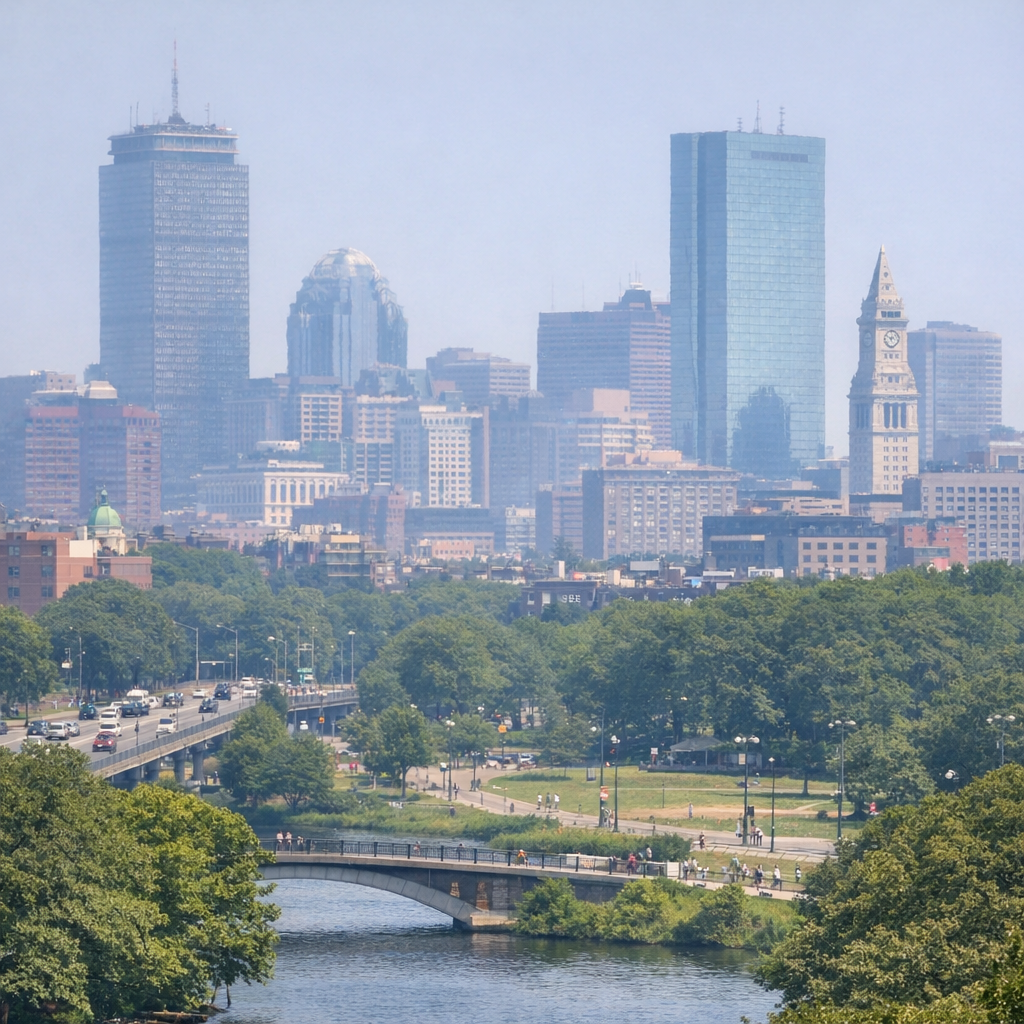
Boston’s climate has undergone significant changes over the past century, with notable increases in average temperatures and more frequent extreme heat events. Understanding these trends is crucial for residents and policymakers alike.
Historical Climate Trends
Since the early 20th century, Massachusetts has experienced a temperature rise of approximately 3.5°F. In the decade from 2010 to 2020, Boston recorded more hot days than any previous decade in the last 50 years. Historically, the city averaged about 10 days per year with temperatures exceeding 90°F. However, projections indicate that by the 2070s, Boston could face up to 46 such days annually if greenhouse gas emissions continue at their current rate. [Source]
Urban Heat Island Effect
The urban heat island effect exacerbates temperature increases in Boston. Approximately two-thirds of the city’s surface is covered by heat-absorbing materials like asphalt and concrete. This extensive coverage can elevate temperatures in certain neighborhoods by up to 14 degrees compared to less developed areas. Such disparities highlight the need for targeted interventions to mitigate heat risks in vulnerable communities. [Source]
Health Implications
Extreme heat poses significant health risks, including heat-related illnesses and increased mortality rates. Vulnerable populations, such as the elderly, children, and those with pre-existing health conditions, are particularly at risk. The city has recognized these challenges and is actively working to enhance its resilience against extreme heat events. [Source]
City Initiatives and Future Outlook
Boston has launched several initiatives to combat the effects of climate change. The Climate Ready Boston initiative focuses on developing resilient solutions to prepare the city for climate change impacts. Additionally, the Heat Resilience Solutions for Boston plan provides a citywide framework to build a more just, equitable, and resilient Boston in the face of rising temperatures. [Source]
As Boston continues to experience the effects of climate change, staying informed and engaged with city initiatives is essential for all residents. By understanding the trends and participating in resilience efforts, we can collectively work towards a sustainable and livable future for our city.