

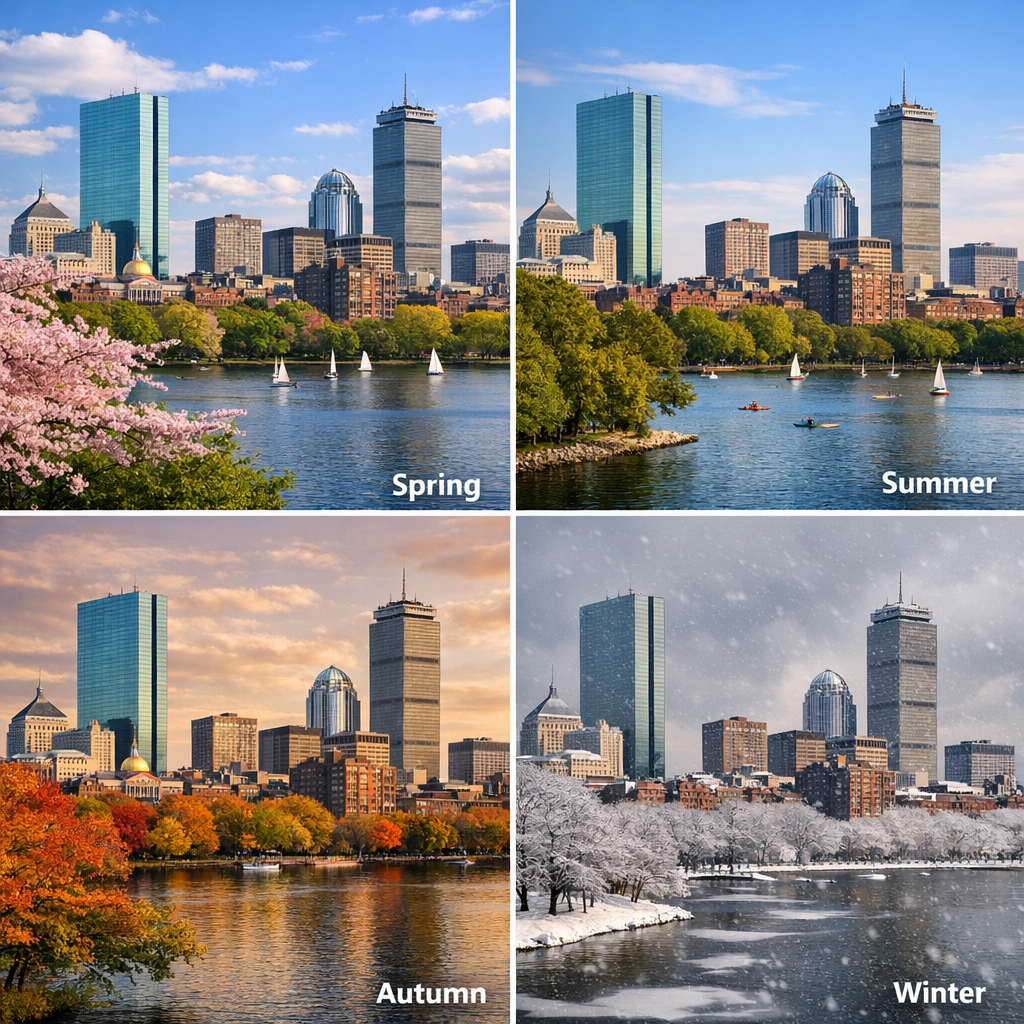
Boston’s climate is characterized by its distinct seasons, each bringing unique weather patterns and environmental considerations. Understanding these patterns is essential for residents to navigate and adapt to the city’s evolving climate.
Seasonal Weather Patterns
Winter
Winters in Boston are typically cold, with average low temperatures around 21.3°F (-5.9°C) in January. Snowfall is common, and residents should be prepared for occasional nor’easters that can bring heavy snow and strong winds.
Spring
Spring sees a gradual warming, with average highs reaching 57.0°F (13.9°C) in April. This season often brings increased precipitation, averaging 4.35 inches (110.49 mm) in April, leading to lush greenery and blooming flora.
Summer
Summers are warm and humid, with average highs of 82.6°F (28.1°C) in July. Heatwaves are becoming more frequent, and the urban heat island effect can cause temperatures in certain areas to rise significantly higher than in surrounding regions.
Fall
Autumn offers mild temperatures and vibrant foliage, with average highs around 62.6°F (17°C) in October. This season is generally drier, providing comfortable conditions for outdoor activities.
Environmental Changes and Climate Resilience
Boston is experiencing the impacts of climate change, including rising temperatures and more frequent extreme weather events. The city has implemented initiatives like Climate Ready Boston to address these challenges and enhance resilience.
Residents can contribute by staying informed about weather forecasts, participating in community resilience programs, and adopting sustainable practices to mitigate environmental impacts.
By understanding Boston’s climate and the ongoing environmental changes, residents can better prepare for and adapt to the city’s evolving conditions.