

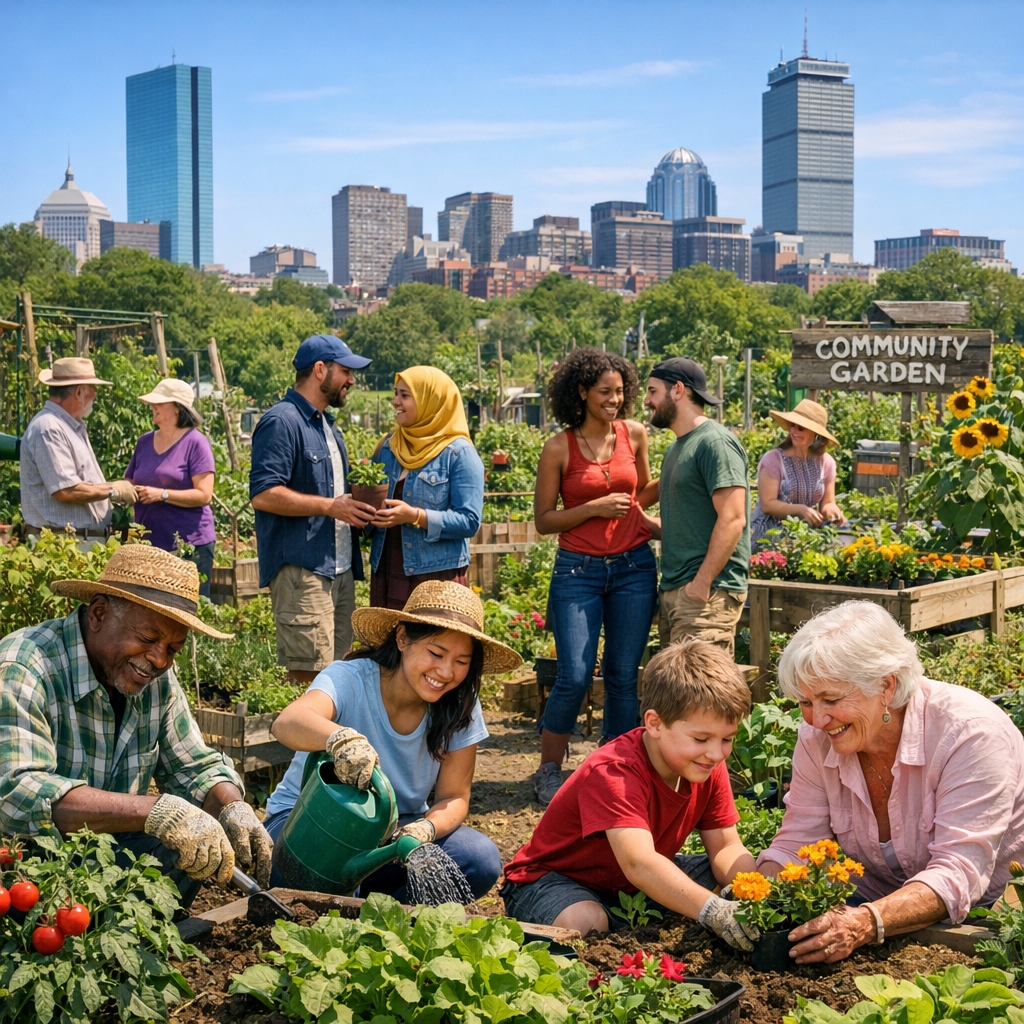
In the heart of Boston’s bustling neighborhoods, community gardens serve as vital green spaces where residents come together to cultivate not only plants but also relationships and a sense of belonging. These gardens offer a unique opportunity for city dwellers to engage with nature, grow their own food, and strengthen community ties.
The Growth of Community Gardens in Boston
Boston boasts a rich tapestry of community gardens spread across its diverse neighborhoods. Organizations like The Trustees manage 56 community gardens totaling 15 acres in eight Boston neighborhoods, including Dorchester, East Boston, the Fenway, Jamaica Plain, Roxbury, Mattapan, Mission Hill, and the South End. These gardens range in size from small 10-plot spaces to expansive gardens with over 150 plots, featuring raised beds, sun shelters, fruit trees, and native plant-filled perennial borders.
In addition to these, the City of Boston’s GrowBoston program has been instrumental in expanding urban agriculture. As of October 2025, GrowBoston celebrated the creation of over 500 raised bed gardens across the city. These gardens provide residents with the tools, knowledge, and space to grow their own food, while also helping build stronger, healthier, and more connected communities.
Community Gardens as Hubs of Connection
Beyond providing fresh produce, community gardens serve as hubs for social interaction and cultural exchange. The Leland Cooperative Garden in Jamaica Plain, for instance, operates without individually owned plots, emphasizing collective stewardship and open access. This model fosters a sense of shared responsibility and inclusivity, allowing neighbors to collaborate and learn from one another.
Similarly, the Worcester Street Community Garden in the South End has been a collective effort of over 130 gardeners since 1955. Some members have had plots in their families for generations, creating a vibrant community space that gives people the chance to meet their neighbors, engage in a community, and enjoy gardening in a city that does not have a lot of space for residents to do so.
Environmental and Educational Benefits
Community gardens also contribute to environmental sustainability by promoting green spaces, enhancing biodiversity, and improving air quality. They serve as educational platforms where residents, especially children, can learn about agriculture, nutrition, and environmental stewardship firsthand.
Programs like GrowBoston’s Raised Bed Garden Program not only improve access to fresh, local produce but also provide opportunities for learning, skill development, and community involvement. By combining education with access to garden space, the program empowers families with the skills and confidence to tend their own gardens and strengthen neighborhood food systems.
Getting Involved
For those interested in joining a community garden, The Trustees offer a plot request form for their managed gardens. Additionally, the City of Boston provides a comprehensive directory of community gardens and urban farms, making it easier for residents to find and connect with local green spaces.
Community gardens are more than just plots of land; they are vibrant spaces where individuals come together to cultivate food, friendships, and a shared sense of purpose. As these gardens continue to flourish, they play an essential role in enhancing the quality of urban life in Boston.