

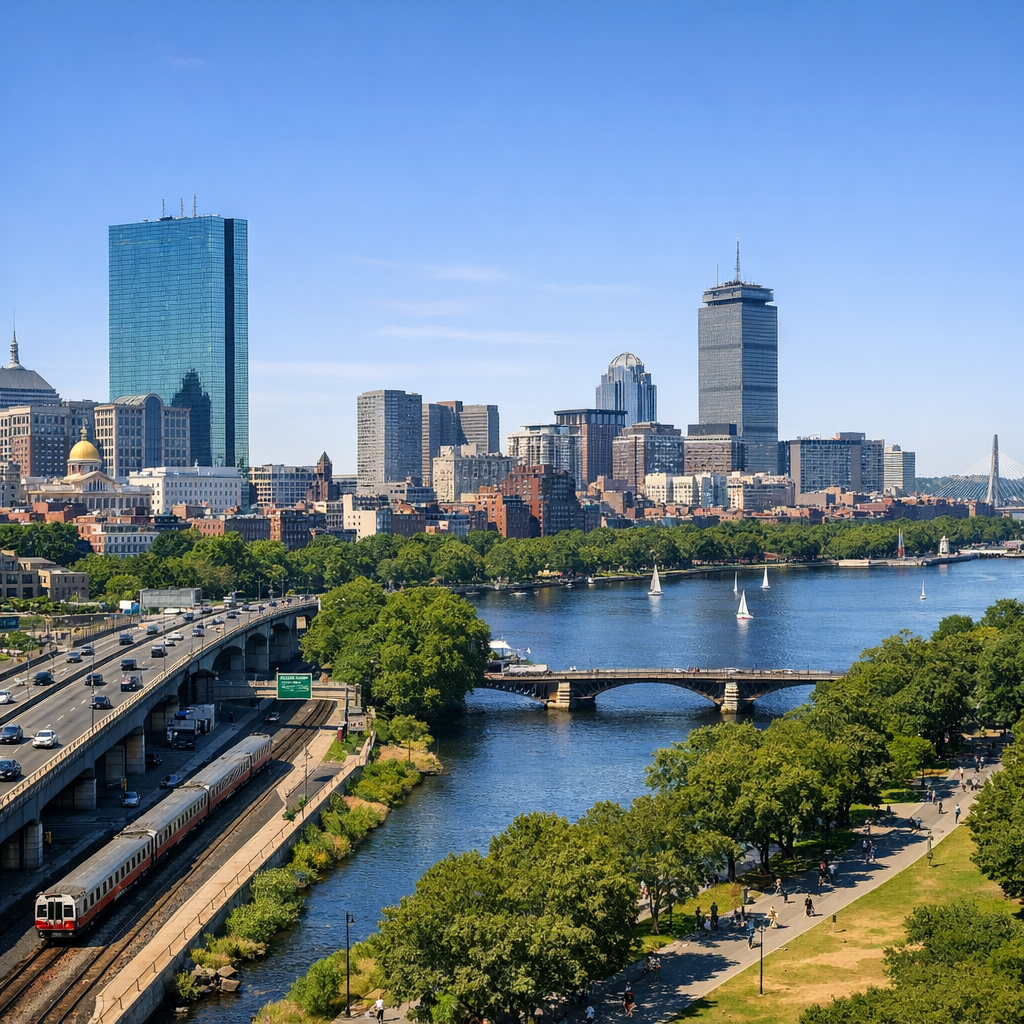
Boston’s climate is characterized as Humid Continental with hot summers and year-round precipitation. Average annual temperatures range from a low of 43.1°F to a high of 59.8°F, with annual precipitation averaging 49.6 inches. The city falls within USDA Plant Hardiness Zone 7a, indicating a growing season from early April to early November.
Seasonal Weather Patterns
Each season in Boston brings distinct weather conditions:
Winter
Winters are cold, with average lows around 21.3°F in January. Snowfall is common, and residents should be prepared for occasional nor’easters that can bring heavy snow and strong winds.
Spring
Spring sees a gradual warming, with average highs reaching 57.0°F by April. This season often brings increased rainfall, contributing to the city’s annual precipitation.
Summer
Summers are warm and humid, with average highs peaking at 82.6°F in July. Historically, Boston experienced around 10 days over 90°F each summer. However, due to climate change, the city has seen an increase in the number of hot days, with projections indicating up to 130 days over 80°F annually by the 2070s.
Fall
Autumn brings cooler temperatures and vibrant foliage, with average highs around 62.6°F in October. This season is generally pleasant, with moderate temperatures and lower humidity.
Environmental Challenges
Boston faces several environmental challenges related to its climate:
Urban Heat Island Effect
The city’s extensive coverage of roofs, roads, and parking lots contributes to the urban heat island effect, raising temperatures in some neighborhoods by up to 14 degrees compared to less-developed areas. This heat disparity can exacerbate heat emergencies, particularly in vulnerable communities.
Climate Change Impacts
Climate change has led to a 3.5°F increase in Massachusetts temperatures since the early 20th century. This warming trend results in more frequent and intense heat waves, posing health risks and straining infrastructure. The city has developed initiatives like Climate Ready Boston to address these challenges and enhance resilience.
Staying Informed
Understanding Boston’s climate and environmental challenges is crucial for residents and visitors. Staying informed about seasonal weather patterns and participating in local climate resilience efforts can help the community adapt to changing conditions and mitigate potential risks.